Yellowstone in 5 days – Wildlife, Geysers, Scenic Drives & Easy Hikes
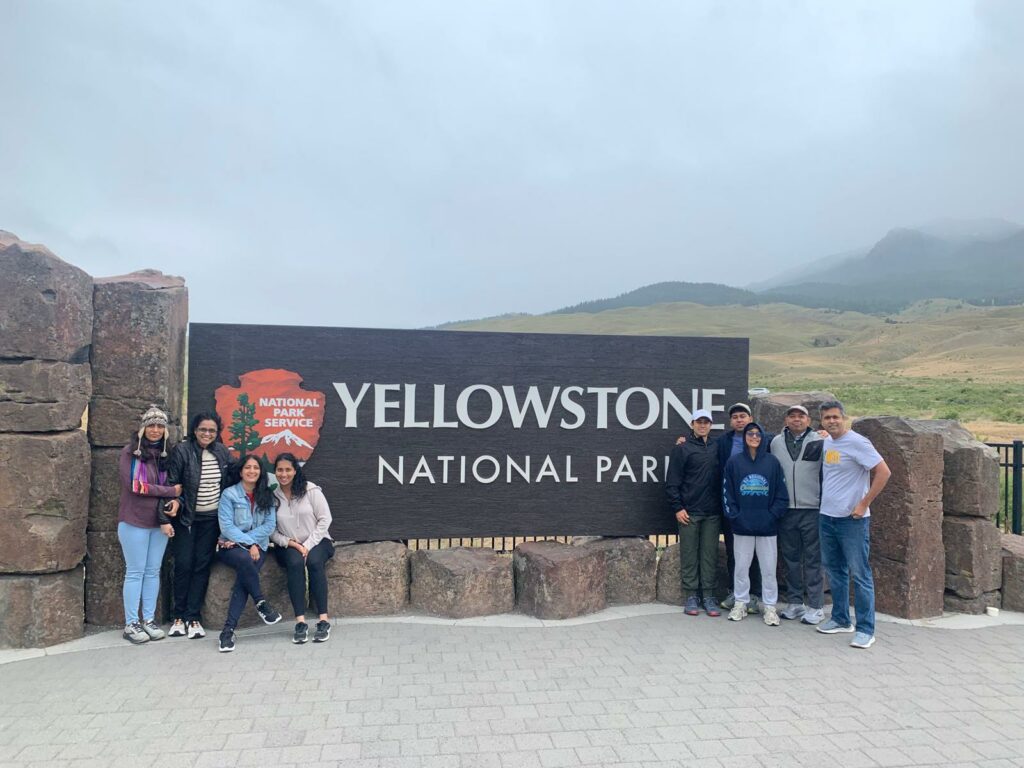
Yellowstone National Park is one of those rare places that leaves you wanting to come back before you’ve even left. Our first visit introduced us to the park’s famous geothermal features, scenic drives, and iconic landmarks. We explored many of the popular attractions near West Yellowstone, visited Mammoth Hot Springs, and experienced the incredible landscapes that make Yellowstone one of America’s most visited national parks.
Yet, as amazing as that trip was, we knew there was much more to discover.
For our second visit, we wanted to experience Yellowstone differently. Instead of trying to check off every attraction, we focused on slowing down apwnding more time watching wildlife viewing, scenic hikes, quieter corners of the park, and simply enjoying Yellowstone instead of rushing from one attraction to the next.
This adventure was even more special because we were joined by our friends from Dallas and New York. Traveling together meant sharing unforgettable wildlife sightings, cooking meals at our vacation home after long days in the park, and ending each evening reliving the highlights of the day.
To make the most of our time, we flew into Bozeman, Montana, rented our cars, and began our journey from Gardiner, the gateway to Yellowstone’s North Entrance. After two nights in Gardiner, we moved to West Yellowstone for three nights before continuing south to Grand Teton National Park and flying home from Jackson Hole.
Looking back, this turned out to be the perfect itinerary. Staying near the North Entrance gave us easy access to Lamar Valley for early morning wildlife viewing, while moving to West Yellowstone later in the trip made exploring the park’s geothermal areas much more convenient.
If you’re planning your first or even second trip to Yellowstone, this 5-day itinerary combines wildlife, iconic landmarks, easy hikes, and scenic drives at a comfortable pace.
Quick Trip Summary
| Category | Details |
|---|---|
| Trip Duration | 5 Days |
| Airport In | Bozeman Yellowstone International Airport (BZN) |
| Airport Out | Jackson Hole Airport (JAC) |
| Where We Stayed | Gardiner (2 nights) & West Yellowstone (3 nights) |
| Travel Style | Wildlife • Hiking • Scenic Drives • Photography |
| Favorite Wildlife Area | Lamar Valley |
| Favorite Scenic Drive | Hayden Valley at Sunset |
| Favorite Hike | South Rim Trail (Grand Canyon of the Yellowstone) |
| Favorite Geothermal Area | Grand Prismatic Spring |
| Best Time to Visit | Late June to Early July |
Why We Split Our Stay Between Gardiner & West Yellowstone
One of the questions I often see when planning a Yellowstone trip is, “Where should I stay?”. After experiencing both locations, I can confidently say that splitting your stay is one of the best decisions you can make if you have at least five days in the park.
We spent our first two nights in Gardiner, a small town just outside Yellowstone’s North Entrance. Since our itinerary focused heavily on wildlife, this location was ideal. Lamar Valley, one of the best places in North America to see wolves, bears, bison, and other wildlife is much easier to reach from Gardiner than from West Yellowstone. Leaving at 4:00 AM for sunrise wildlife viewing felt manageable because we had only a short drive to the park entrance.
For the remaining three nights, we stayed in West Yellowstone, which placed us much closer to Yellowstone’s famous geothermal attractions, including Old Faithful, Grand Prismatic Spring, Norris Geyser Basin, and the Grand Canyon of the Yellowstone. This significantly reduced driving time and gave us more flexibility to enjoy the trails and viewpoints without feeling rushed.
If we were to repeat this itinerary, we would absolutely stay in the same locations again.
📝 Latha’s Tip
If wildlife is one of your main priorities, stay in Gardiner first. If your focus is Yellowstone’s geysers, waterfalls, and geothermal attractions, stay in West Yellowstone. Splitting your stay lets you experience both sides of the park without spending hours driving every day.
Know Before You Go
Before diving into our day-by-day itinerary, here are a few things that made our trip smoother:
- Purchase your park pass in advance if you plan to visit multiple national parks. The America the Beautiful Pass is a great value if you’re also visiting Grand Teton.
- Start early. Wildlife is most active around sunrise and sunset, and parking at popular attractions fills up quickly.
- Pack layers. Even in late June and early July, mornings were surprisingly chilly, while afternoons warmed up significantly.
- Carry binoculars if you have them. We also packed a camera with a zoom lens, which made wildlife viewing much more enjoyable.
- Download offline maps. Cell service is limited throughout much of Yellowstone.
Our Yellowstone Itinerary at a Glance
| Day | Highlights |
|---|---|
| Day 1 | Bozeman → Gardiner |
| Day 2 | Lamar Valley • Slough Creek • Soda Butte • Hayden Valley |
| Day 3 | Mammoth Hot Springs • Tower Fall • Norris Geyser Basin |
| Day 4 | Old Faithful • Upper Geyser Basin • Grand Prismatic Overlook • Midway Geyser Basin |
| Day 5 | South Rim Trail • Upper Falls • Artist Point • Lower Falls |
DAY 1 – Arrival in Bozeman & Drive to Gardiner
After an easy flight into Bozeman Yellowstone International Airport, we picked up our rental cars and began the scenic drive toward Gardiner, Montana, our home for the next two nights. The drive takes about 1 hour 45 minutes and gradually transitions from Montana’s wide-open ranchlands into rugged mountain scenery. As we got closer to Gardiner, the excitement started to build – we knew that by the next morning we’d finally be exploring one of the best wildlife destinations in North America.
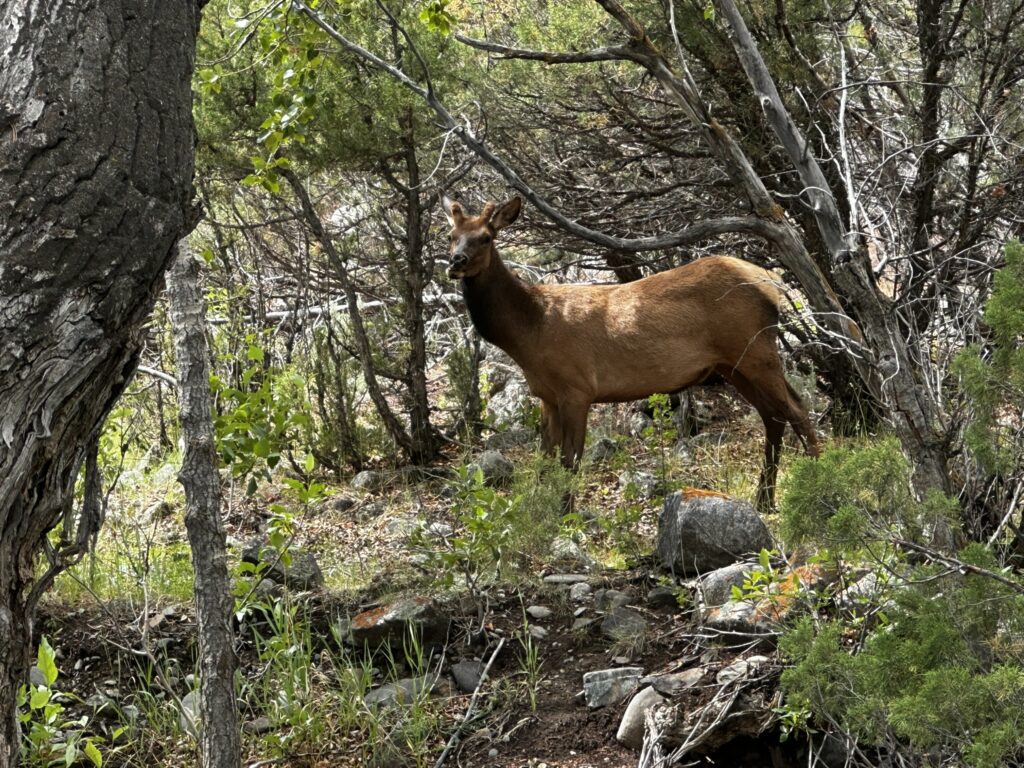
For this trip, we stayed in a beautiful VRBO located about five miles from Yellowstone’s North Entrance. It was nestled among the trees, offering plenty of space for our group of three families. One of the unexpected highlights was seeing elk wander through the backyard one evening, a reminder that wildlife isn’t limited to inside the park.
Since we had planned an early morning wildlife drive the next day, we intentionally kept our arrival day relaxed. After checking in, we headed into Gardiner to stock up on groceries, snacks, and supplies for the week. Having a fully equipped kitchen meant we could prepare breakfast before sunrise and enjoy home-cooked dinners together each evening after long days inside the park. Those quiet evenings, sharing stories, looking through photos, and reliving the day’s wildlife sightings became some of our favorite memories from the trip.
Before calling it a night, we packed our day bags, charged camera batteries, filled water bottles, and laid out warm layers for the next morning. With alarms set for 3:15 AM, everyone was eager to get some sleep before our first big adventure.
📝 Latha’s Tip
If you’re planning a sunrise visit to Lamar Valley, stay near Gardiner the night before. It makes a huge difference compared to driving from West Yellowstone, especially when you’re leaving before dawn.
DAY 2 – Wildlife Day in Lamar Valley & Hayden Valley
If someone asked me to describe our Yellowstone trip in one day, this would be it.
The day started well before sunrise. Our alarms went off at 3:15 AM, and by 4:00 AM, we were driving through Yellowstone’s North Entrance under a sky full of stars. The roads were quiet, and there was an exciting sense of anticipation, we had one goal for the morning: wildlife.
Sunrise in Lamar Valley
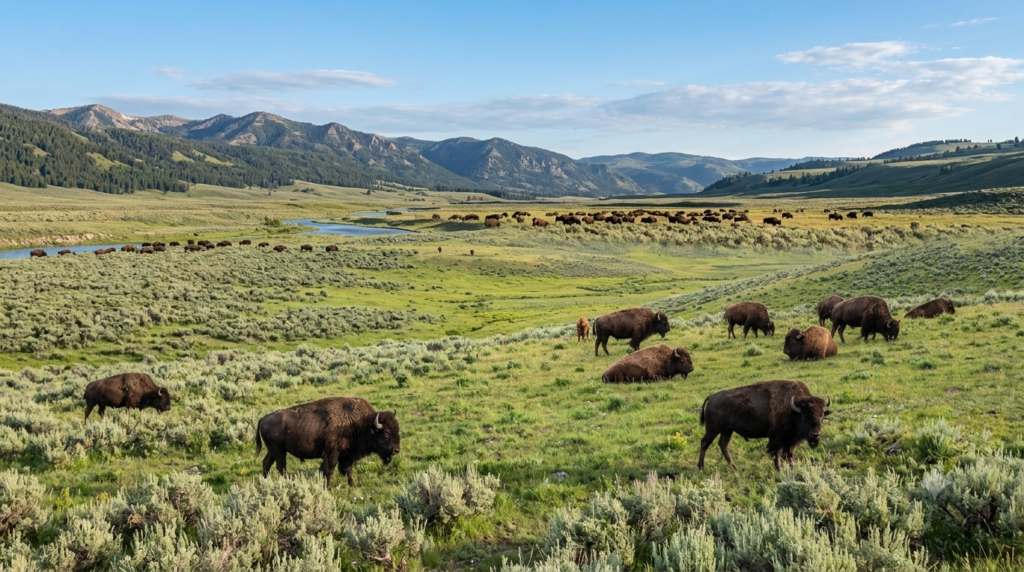
Known as the “Serengeti of North America,” Lamar Valley is one of the best places in the world to observe wildlife in its natural habitat. Wide-open grasslands, rolling hills, the Lamar River, and distant mountain ranges create the perfect ecosystem for Yellowstone’s iconic animals.
As daylight slowly spread across the valley, the landscape came alive. Within minutes, we began spotting bison grazing peacefully across the meadows. Soon after, several cars had pulled over along the roadside. In Yellowstone, that’s usually the first clue that someone has found something special.
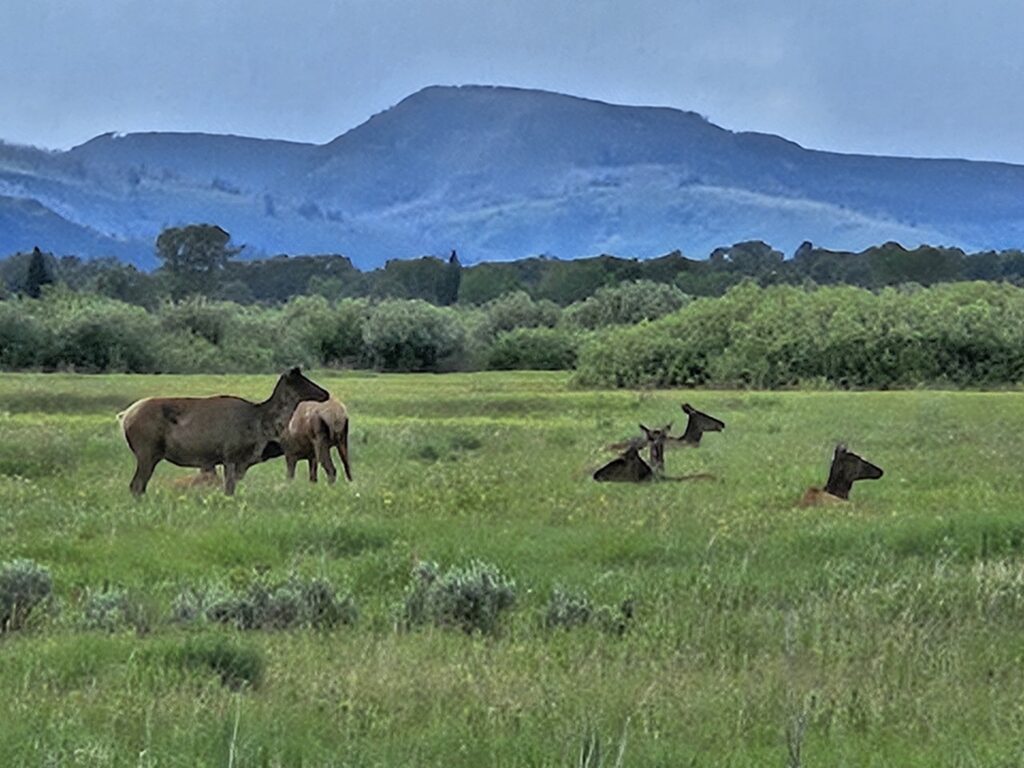
Sure enough, wildlife photographers had already set up their powerful spotting scopes. Like many visitors, we walked over to see what everyone was looking at. The photographers were incredibly friendly and invited us to look through their scopes. Looking through one of them, we experienced something we had hoped for but weren’t expecting to actually see a pack of wolves moving across a distant hillside.
Seeing wolves in the wild for the first time was unforgettable. Without those spotting scopes, we never would have known they were there. That moment alone made the 4:00 AM wake-up call completely worthwhile.
Wildlife We Spotted
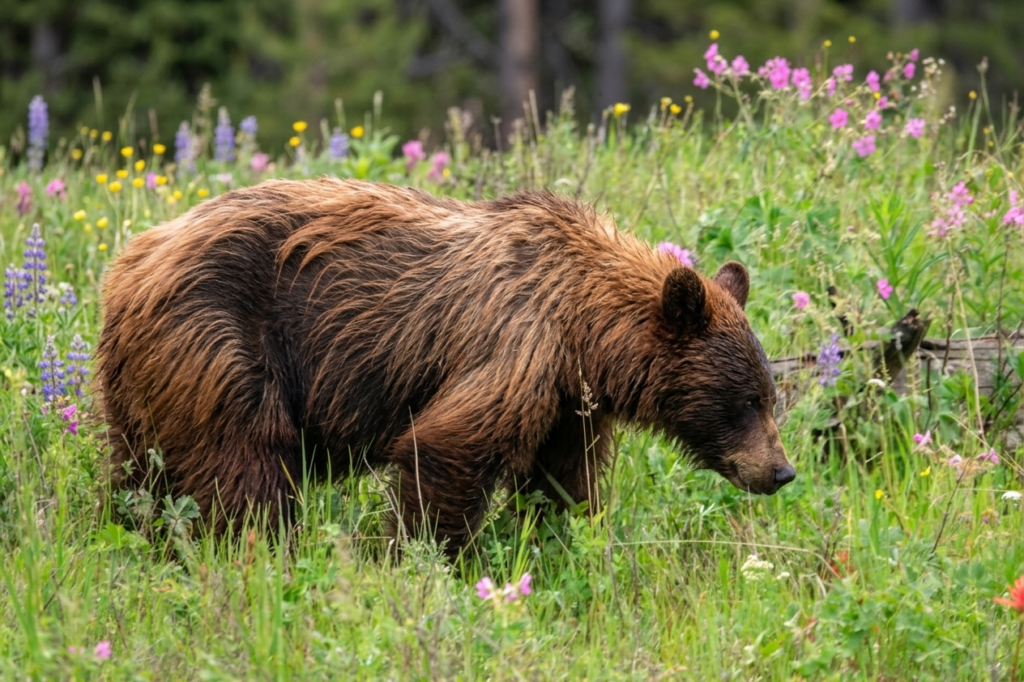
Throughout the morning, Lamar Valley continued to exceed our expectations.During our drive, we were fortunate to see:
- 🐺 Wolf pack (through spotting scopes)
- 🐻 Multiple grizzly bears
- 🐻 Black bears
- 🦬 Hundreds of bison
- 🦌 Pronghorn
- 🦅 Bald eagles
- 🦌 Mule deer
Every few miles brought another surprise. Sometimes we’d simply pull over, turn off the engine, and spend several minutes watching animals go about their day. There was never a feeling of rushing to the next attraction, and I think that’s what made this experience so memorable.
Yellowstone teaches you to slow down.
Afternoon Break
After several incredible hours in Lamar Valley, we returned to our VRBO around 10:00 AM for a well-deserved break. One of the advantages of staying in Gardiner was being close enough to return for lunch, relax for a few hours, and recharge before heading back into the park for sunset.
That midday break made a huge difference, especially after such an early start.
Sunset in Hayden Valley
Later that afternoon, we drove south toward Hayden Valley, hoping to experience Yellowstone’s famous evening wildlife activity.
If Lamar Valley impressed us in the morning, Hayden Valley provided the perfect ending to an already unforgettable day.The Yellowstone River winds gently through broad open meadows surrounded by rolling hills, creating one of the most picturesque landscapes in the park. As the evening light turned golden, the valley seemed to glow.
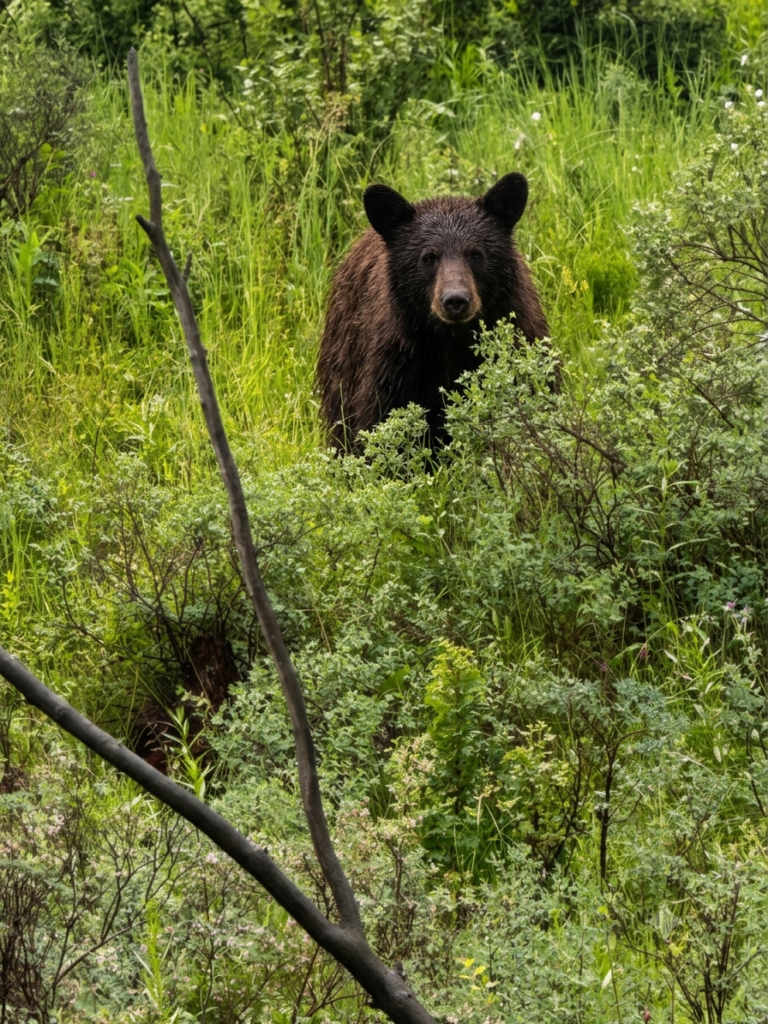
We spotted additional black bears, watched enormous herds of bison grazing across the valley, and enjoyed the peaceful atmosphere as the sun slowly dipped below the horizon. Compared to Lamar Valley, Hayden Valley felt more expansive and incredibly photogenic. Every overlook seemed to offer another postcard-worthy view.
Even if wildlife hadn’t appeared, the scenery alone would have made the drive worthwhile.
Why We Loved Combining Lamar & Hayden Valley
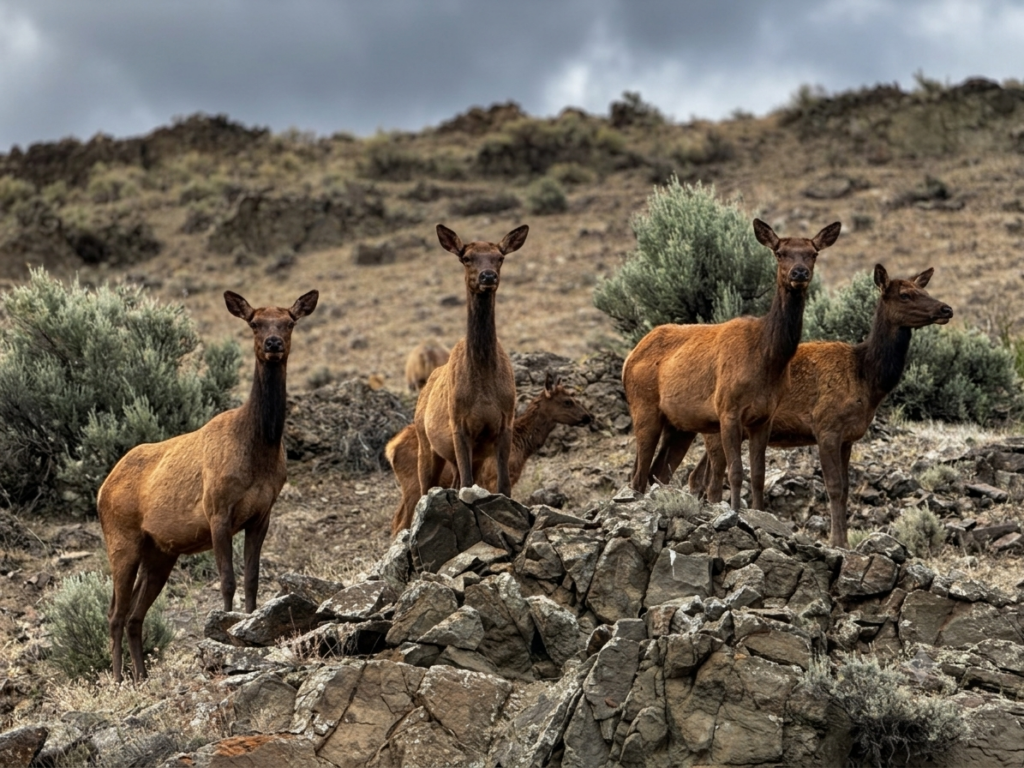
Looking back, dedicating an entire day to Yellowstone’s wildlife turned out to be one of the best decisions of our trip.
Lamar Valley gave us the thrill of searching for wolves, bears, and other wildlife at sunrise, while Hayden Valley offered a slower, more relaxed evening surrounded by breathtaking landscapes.
Together, they perfectly captured what makes Yellowstone so special not just its famous geothermal features, but its incredible diversity of wildlife and natural beauty.
⭐ Latha’s Favorite Moment
Watching a wolf pack through a professional spotting scope at sunrise in Lamar Valley is something I’ll never forget. It was one of those rare travel moments that makes you pause, appreciate where you are, and realize why Yellowstone is unlike anywhere else in the world.
Day 3 – Mammoth Hot Springs, Tower Fall & Norris Geyser Basin
After an incredible wildlife day in Lamar and Hayden Valley, we slowed the pace a little and explored Yellowstone’s unique geothermal landscapes. The weather was quite different today, with steady rain through much of the morning, but that didn’t take away from the experience. In fact, the mist rising from the hot springs gave several areas an almost surreal atmosphere.
Today also marked our move from Gardiner to West Yellowstone, where we would spend the next three nights exploring the park’s central and western regions.
Mammoth Hot Springs
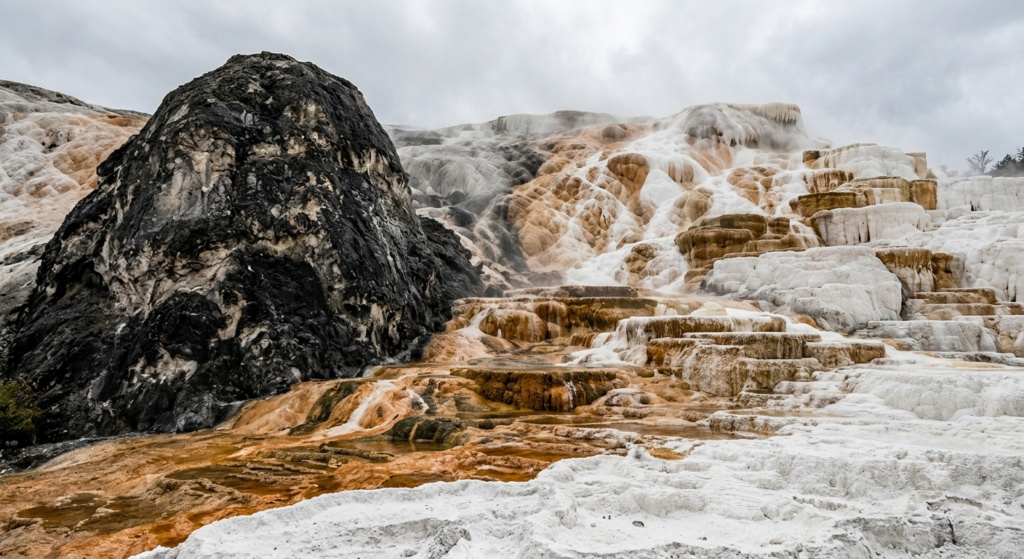
Our first stop was Mammoth Hot Springs, one of the most unique geothermal areas in Yellowstone.
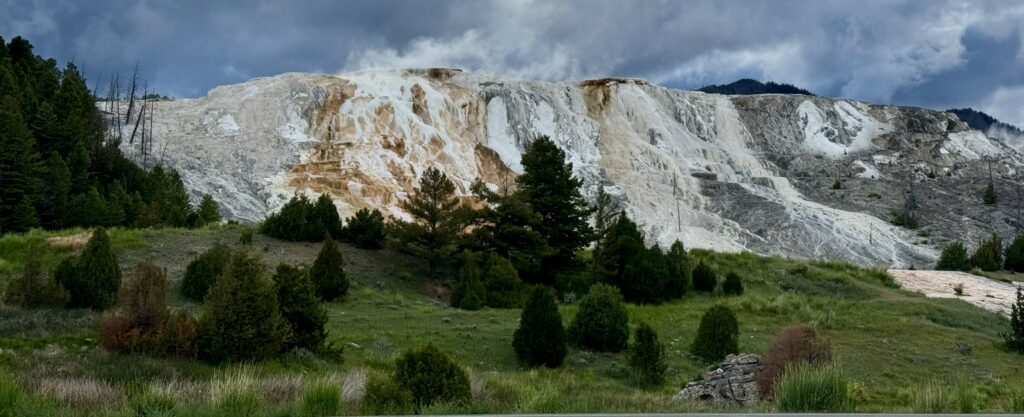
Unlike the colorful pools found at Grand Prismatic Spring or the erupting geysers around Old Faithful, Mammoth Hot Springs is famous for its travertine limestone terraces. Over thousands of years, hot mineral-rich water has flowed down the hillside, depositing layers of calcium carbonate and constantly reshaping the landscape. Because the thermal activity changes over time, no two visits to Mammoth are ever exactly the same.
We explored both the Lower Terraces and the Upper Terraces, walking along the wooden boardwalks that wind through steaming vents, colorful pools, and striking white formations. The rain and low clouds added a dramatic touch, making the steam appear even more pronounced against the terraces.
One of the things I enjoy most about Mammoth is how different it feels from the rest of Yellowstone. Instead of vibrant blues and oranges, you’ll find cascading white terraces that almost resemble frozen waterfalls or snow-covered cliffs. Even though the weather wasn’t ideal, Mammoth Hot Springs was well worth the visit and offered a completely different side of Yellowstone’s geothermal landscape.
📝 Latha’s Tip
Take your time exploring both the Upper and Lower Terraces. Many visitors only stop at the main boardwalk, but driving or walking through the Upper Terraces gives you a much better appreciation of how expansive this area really is.
Scenic Drive Along the Grand Loop Road
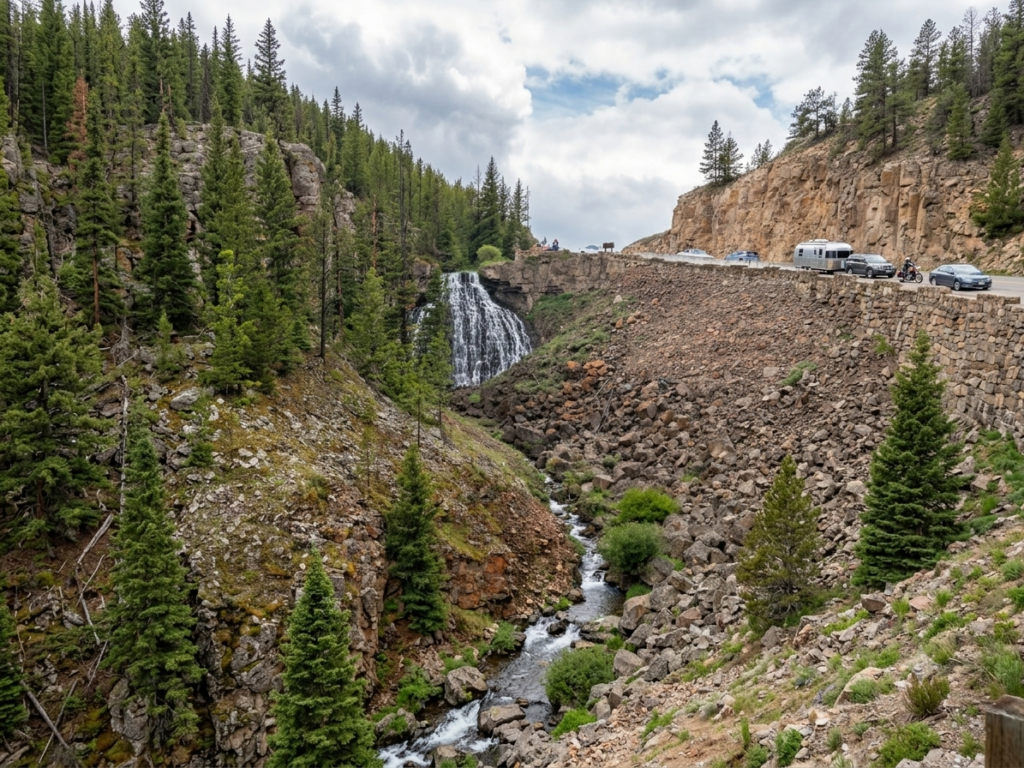
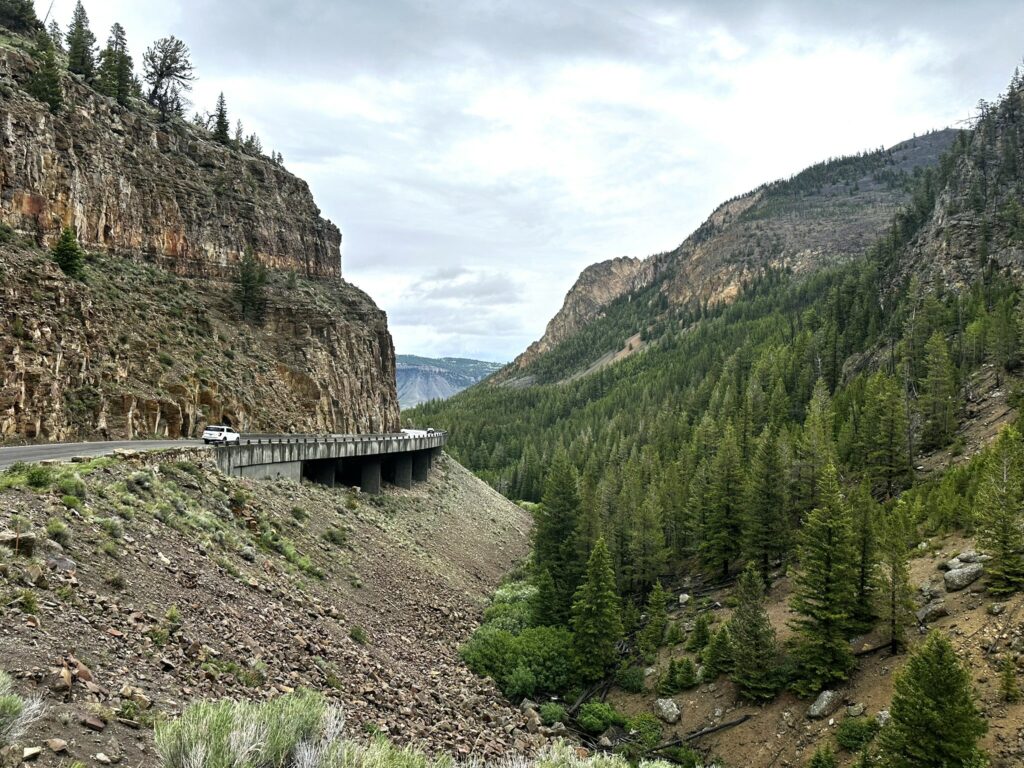
Leaving Mammoth Hot Springs, we continued east along Yellowstone’s Grand Loop Road, one of the most scenic drives in the park. The route winds through rolling hills, open meadows, forests, and rugged mountain landscapes, making the drive just as enjoyable as the destinations themselves.
Although we had originally planned to stop at Tower Fall, the road leading to the waterfall was closed during our visit due to construction. We continued past the Tower-Roosevelt area, taking in the beautiful scenery before making an unexpected stop at Rustic Falls.
Located just beyond the Golden Gate area along the Grand Loop Road, Rustic Falls is a charming 47-foot waterfall that cascades gracefully over a lava rock cliff beside the roadway. Since it’s visible from a nearby pullout and requires almost no walking, it’s an easy stop that many visitors drive past without realizing it’s there.
While Rustic Falls may not be as famous as Yellowstone’s larger waterfalls, we enjoyed taking a short break here to stretch our legs, listen to the rushing water, and appreciate one of the park’s quieter corners before continuing toward Norris Geyser Basin.
Norris Geyser Basin
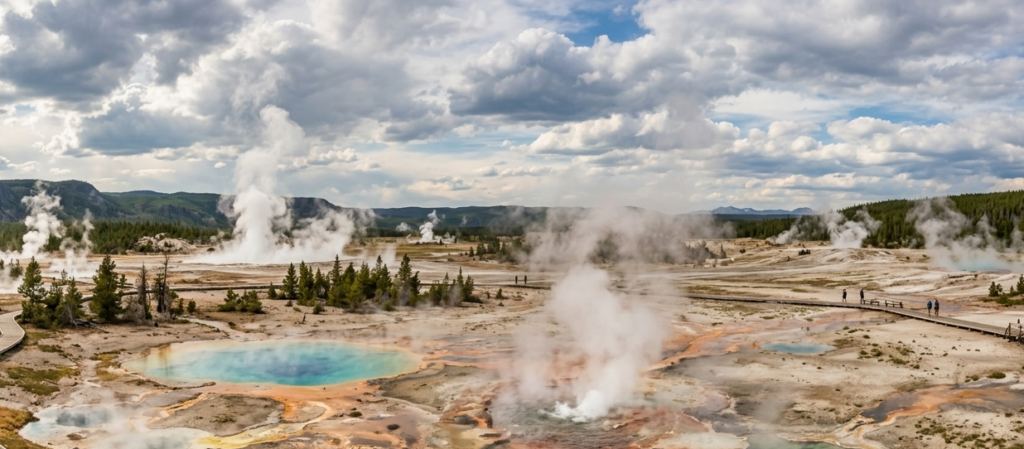
Our final destination for the day was Norris Geyser Basin, and it quickly became one of our favorite geothermal areas in the entire park.
Norris is Yellowstone’s hottest, oldest, and most dynamic geothermal basin, constantly changing as underground water pressure and volcanic activity reshape the landscape. It’s also home to Steamboat Geyser, the world’s tallest active geyser, capable of erupting more than 300 feet into the air although its eruptions are unpredictable.
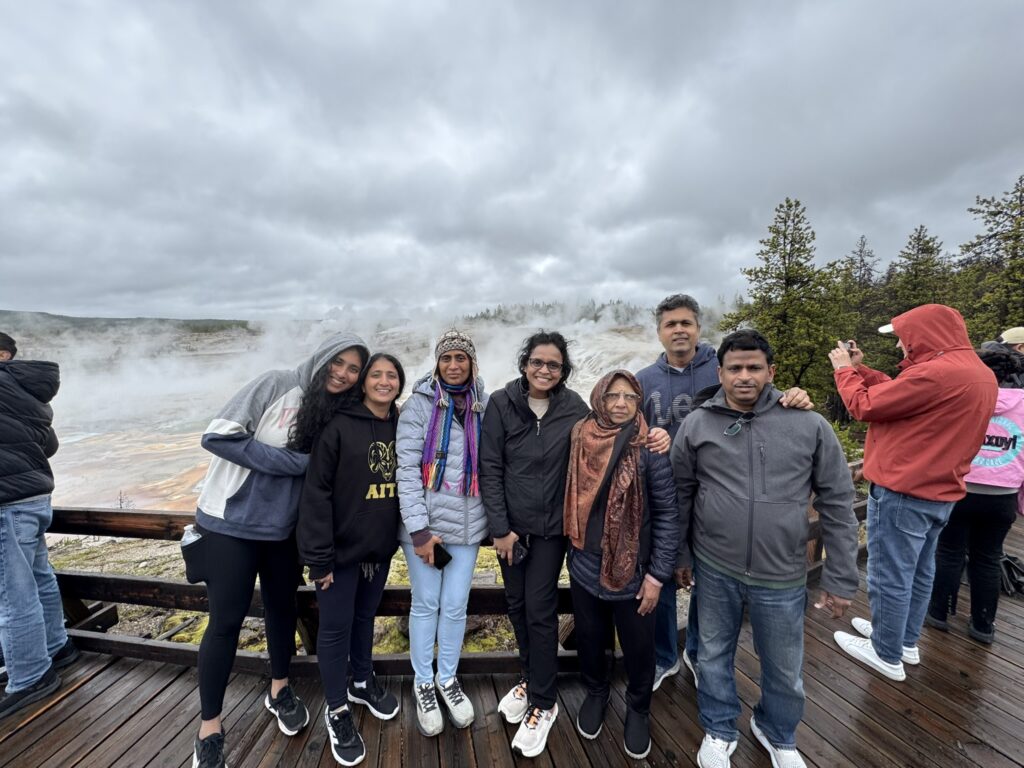
We chose to explore the boardwalk trails at a relaxed pace, taking time to admire the steaming vents, bubbling mud pots, vibrant hot springs, and constantly hissing fumaroles. Walking through Norris almost feels like stepping onto another planet. Steam drifted across the pathways, the smell of sulfur filled the air, and every turn revealed a different geothermal feature.
Unlike Old Faithful, which is famous for its predictability, Norris feels wild and untamed. There’s an energy here that reminds you Yellowstone is sitting above one of the largest volcanic systems on Earth.
One of the most unexpected moments came during our walk through the basin. As we paused to take in the scenery, we could hear the distant howl of wolves echoing across the landscape. They were far beyond anything we could see, but hearing that haunting sound carried by the wind made the experience even more unforgettable. It’s not every day you hear wolves while walking through one of the world’s most active geothermal areas.
📝 Latha’s Tip
Norris Geyser Basin often gets overlooked because visitors are eager to reach Old Faithful. Don’t make that mistake. If you enjoy geothermal landscapes and photography, Norris is one of Yellowstone’s most fascinating places and deserves at least 1½ to 2 hours.
Day 4 – Old Faithful, Upper Geyser Basin & Grand Prismatic Spring
If someone asked me to picture Yellowstone in a single day, this would probably be it. Today was all about the park’s iconic geothermal features from watching Old Faithful erupt to standing above the rainbow-colored waters of Grand Prismatic Spring. This was one of our most anticipated days, and it certainly lived up to expectations.
Old Faithful – Yellowstone’s Most Famous Geyser
No matter how many photos or videos you’ve seen, nothing quite compares to watching Old Faithful erupt in person.
Old Faithful has been erupting for hundreds of years and remains one of the few geysers in the world whose eruptions can be predicted with remarkable accuracy. It typically erupts every 90 minutes, although the interval can vary between 60 and 110 minutes depending on the duration of the previous eruption. We arrived a little early, found seats in the viewing area, and joined visitors from around the world waiting for the show to begin. As the predicted time approached, anticipation grew with every small burst of steam rising from the vent. Then, without warning, the eruption began.
For nearly five minutes, thousands of gallons of steaming water shot high into the sky, reaching heights of well over 100 feet. It’s easy to understand why this has become Yellowstone’s most famous attraction. Even though everyone knows it’s coming, the sheer force of nature is still impressive to witness.After the eruption, visitors erupted into applause, a reminder that even predictable natural events can leave a lasting impression.
📝 Latha’s Tip
Check the posted eruption times when you arrive. Use the waiting time to explore the nearby visitor center, gift shops, or portions of the Upper Geyser Basin before returning a few minutes before the next predicted eruption.
Grand Prismatic Overlook Trail
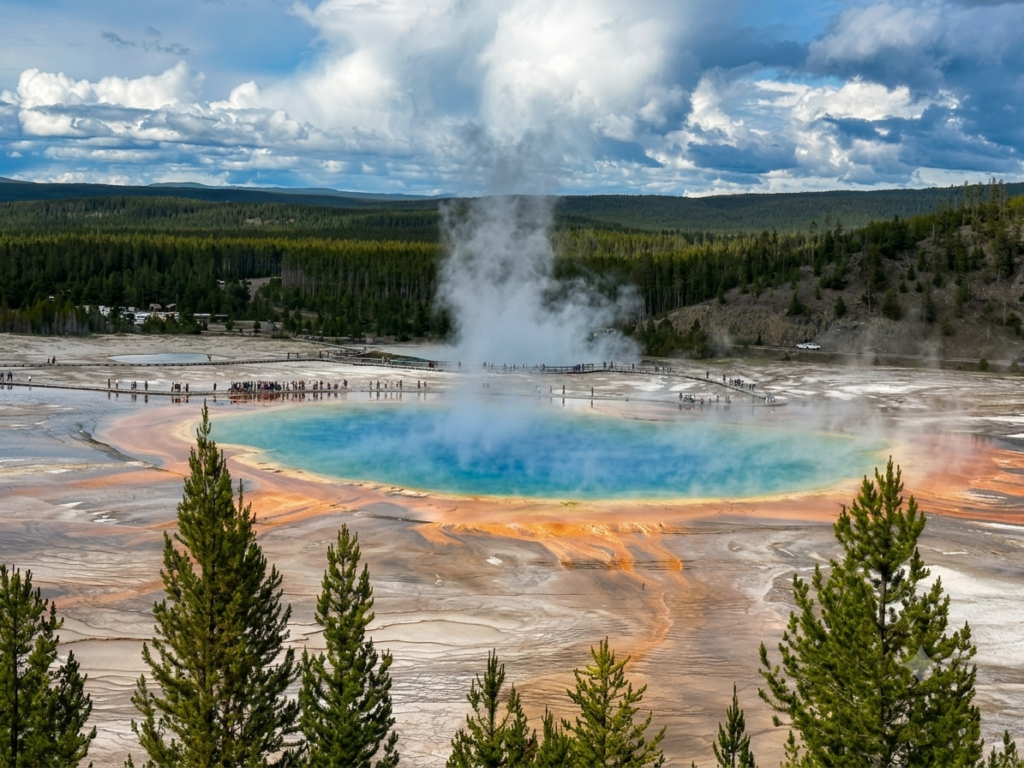
Without a doubt, this became one of my favorite short hikes in Yellowstone.
The Grand Prismatic Overlook Trail begins at the Fairy Falls Trailhead and is a relatively easy walk through a forest before climbing gently to an overlook above the Midway Geyser Basin. The trail is approximately 1.2 miles round trip, with only about 105 feet of elevation gain, making it suitable for most visitors.
As we reached the overlook, the view immediately explained why this trail has become so popular. Spread out below us was Grand Prismatic Spring, the largest hot spring in the United States and the third largest in the world. From above, its brilliant rings of deep blue, emerald green, golden yellow, and burnt orange looked almost unreal.
This elevated viewpoint is the only place where you can truly appreciate the spring’s incredible size and perfectly circular shape. It’s one of those views that simply doesn’t translate fully in photographs, you have to see it in person. We spent quite a while here taking photos and simply admiring the landscape before making our way back down.
⭐ Latha’s Favorite Hike
If you only have time for one short hike in Yellowstone, make it the Grand Prismatic Overlook Trail. The panoramic view from above is absolutely worth the short climb.
Grand Prismatic Spring Boardwalk
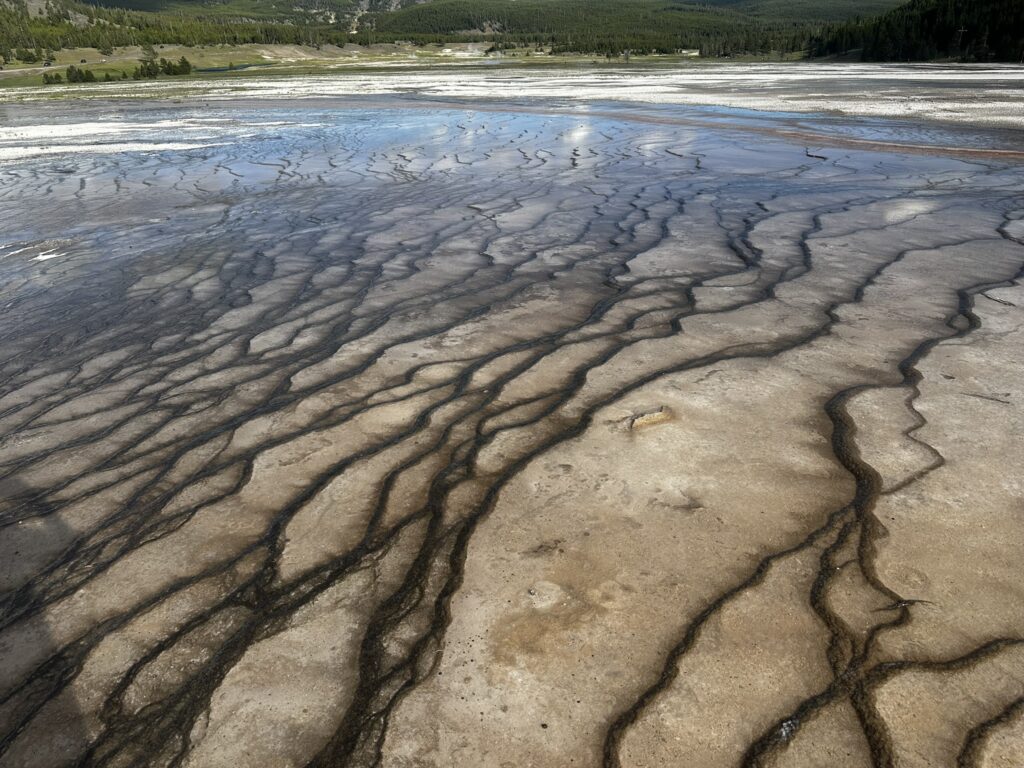
After enjoying the overlook, we headed to the Midway Geyser Basin Boardwalk for a completely different perspective. Walking along the boardwalk brings you right beside Grand Prismatic Spring, allowing you to appreciate its immense size and witness the colorful microbial mats up close.
One of the most fascinating aspects of the spring is the vibrant bands of color created by thermophiles, heat-loving microorganisms that thrive in the mineral-rich hot water. Different species live at different temperatures, producing the striking greens, yellows, oranges, and reds that surround the deep blue center.
Standing just a few feet away, you can watch steam drift across the surface while listening to the constant bubbling and hissing of Yellowstone’s geothermal activity. Although the boardwalk doesn’t provide the complete aerial perspective seen from the overlook, it offers an entirely different experience that lets you appreciate the science and beauty of Grand Prismatic Spring from ground level.
📝 Latha’s Tip
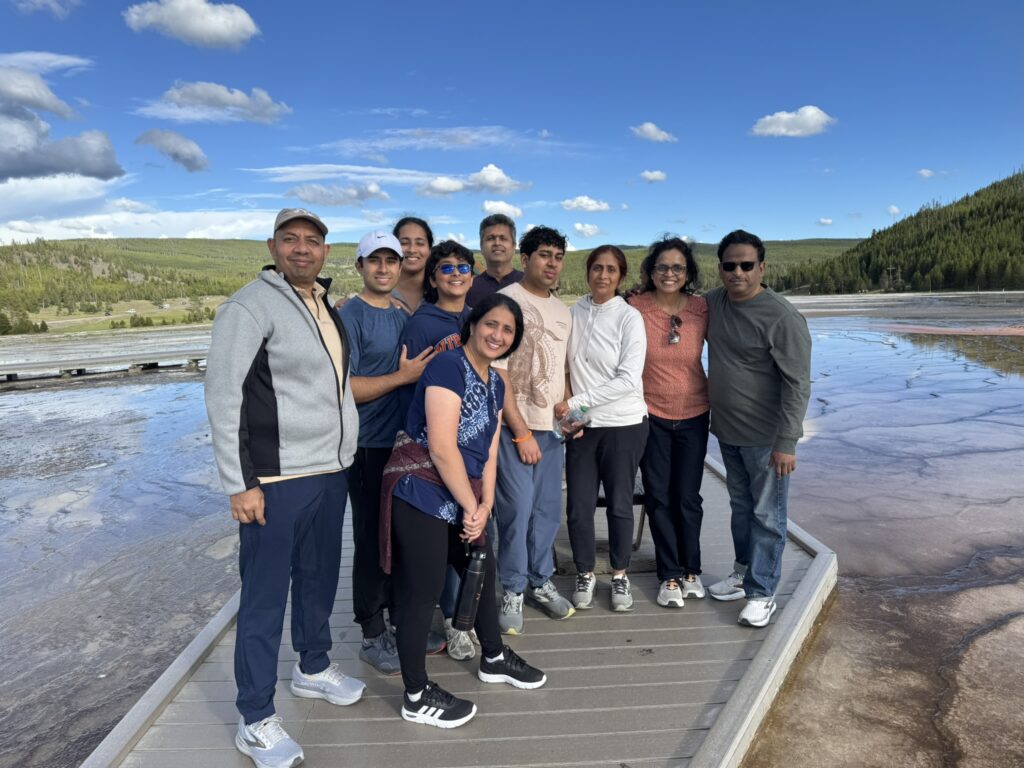
If possible, do both the overlook and the boardwalk. The overlook showcases the spring’s spectacular colors and scale, while the boardwalk lets you experience the steam, textures, and geothermal activity up close. Together, they complement each other perfectly.
Day 5 – Hiking the South Rim Trail & Grand Canyon of the Yellowstone
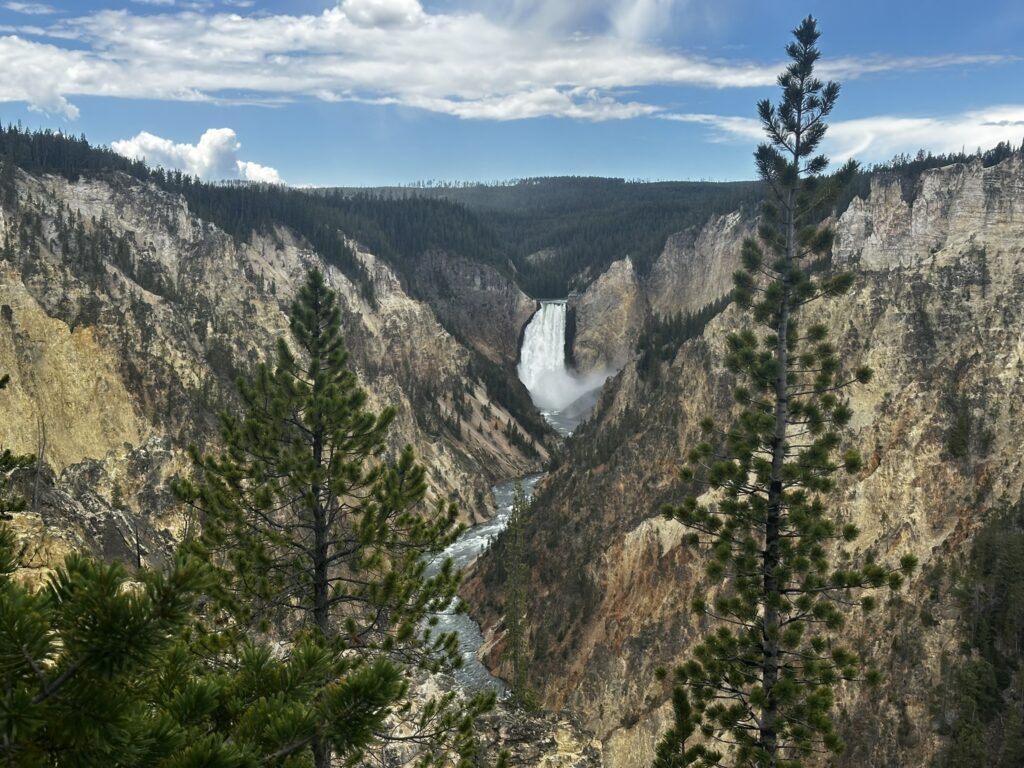
We wrapped up our Yellowstone adventure with one of the most scenic hikes in the park, the South Rim Trail along the Grand Canyon of the Yellowstone.
Starting near the Uncle Tom’s Point parking area, the trail follows the southern rim of the canyon for approximately 3.2 miles, offering spectacular views of the Yellowstone River, dramatic canyon walls, and several scenic overlooks before ending at the iconic Artist Point.
Unlike simply driving between viewpoints, hiking the South Rim Trail allows you to experience the canyon from multiple angles while enjoying a quieter side of Yellowstone. The trail is well maintained with moderate elevation changes, making it an excellent choice for families and casual hikers looking for one of the park’s most rewarding walks. Along the way, we enjoyed beautiful views of the Upper Falls, watched the Yellowstone River carve through the colorful canyon below, and stopped frequently to admire the changing perspectives from each overlook.
The hike culminated at Artist Point, where we were rewarded with one of the most famous views in Yellowstone – the 308-foot Lower Falls plunging into the brilliantly colored canyon below. After five unforgettable days exploring Yellowstone, it felt like the perfect place to reflect on our journey before continuing on to Grand Teton National Park.
📝 Latha’s Tip: If time allows, I highly recommend hiking the South Rim Trail instead of only visiting Artist Point by car. The ever-changing canyon views along the trail make the experience far more memorable than simply stopping at one overlook.
I’ll be sharing a separate, detailed guide to the South Rim Trail including trail maps, parking tips, viewpoints, and hiking advice for anyone planning this hike.
Is This Yellowstone Itinerary Right for You?
This 5-day itinerary is ideal if you:
- Love wildlife and want the best chance of seeing bears, wolves, bison, and elk in their natural habitat.
- Enjoy easy to moderate hikes with rewarding views.
- Prefer a relaxed pace instead of trying to cover every attraction in a single trip.
- Are visiting Yellowstone for the first or second time and want a well-balanced mix of wildlife, geothermal wonders, waterfalls, and scenic drives.
If your goal is to see every corner of Yellowstone in one visit, you’ll likely need a few additional days. Yellowstone is a massive park, and we intentionally chose to spend more time enjoying fewer places rather than rushing from one attraction to another.
Continue the Adventure
Our road trip didn’t end here! From Yellowstone, we continued south into Grand Teton National Park, where we spent two incredible days hiking around Jenny Lake, taking the shuttle to Hidden Falls and Inspiration Point, spotting moose and black bears, and exploring some of the most breathtaking mountain scenery in the American West.
👉 Next up: Grand Teton National Park Itinerary (2 Days): Best Hikes, Wildlife & Scenic Drives
Leave a Reply